How to Read Percentile Dice
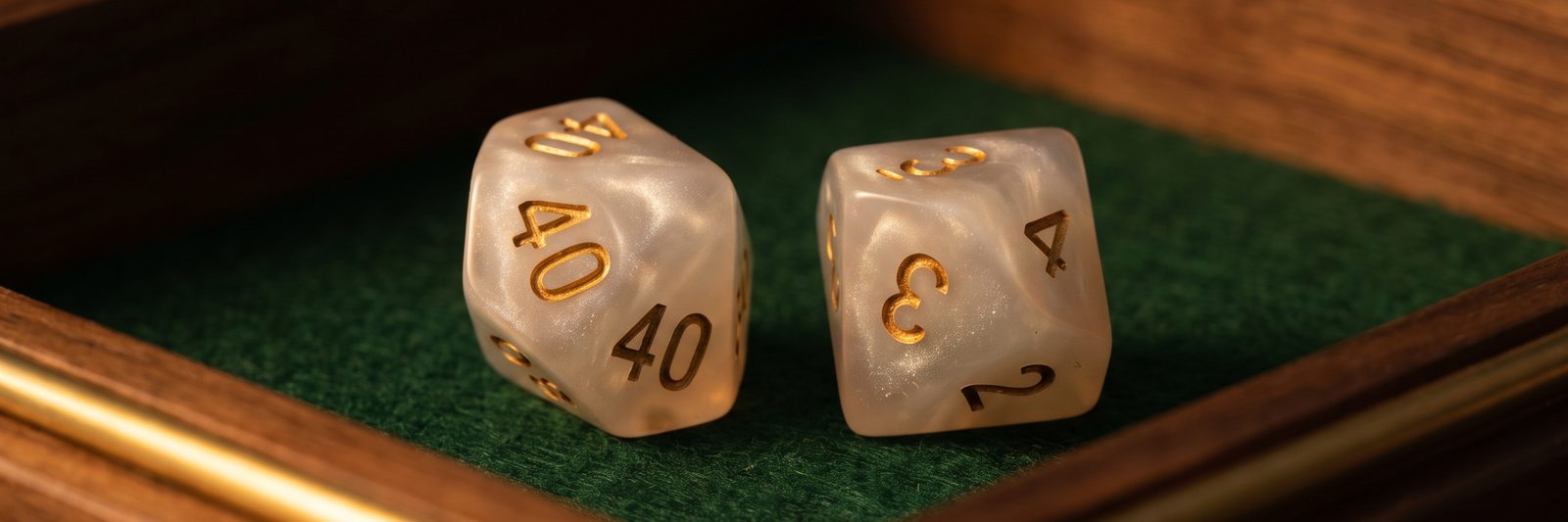
Percentile dice are two d10s: one gives the tens, the other the units. A 3 and a 7 read as 37. Double zero reads as 100, not zero.
Most sets include one d10 numbered 0 to 9 and a second numbered 00 to 90 in tens. Rolled together they give a flat number from 1 to 100, with every result equally likely.
Reading the pair
| Tens die | Units die and result |
|---|---|
| 30 | 7 reads as 37 |
| 00 | 7 reads as 7 |
| 90 | 0 reads as 90 |
| 10 | 0 reads as 10 |
| 00 | 0 reads as 100 |
The only case worth memorising is the last one. Double zero is 100, not zero. There is no zero on a percentile roll, because the range runs 1 to 100.
If both dice are numbered 0 to 9
Plenty of sets give you two identical d10s with no tens die. Decide before you roll which one is the tens, by colour, and read it the same way. Saying it out loud first is worth the half second, because deciding after you can see the numbers is how arguments start.
Rolling one instead of two
A single d100 gives the same distribution in one throw, and that is what the roller below does. It is the same maths, just fewer objects on the table.
Why percentile rolls are useful
Every result is already a percentage, which makes them ideal for anything expressed as odds. A table entry that happens 15% of the time is simply a result of 15 or lower. No conversion, no arithmetic at the table.
The percentile dice roller shows the tens and units dice separately if you prefer to see the pair, and the d100 page covers what the die is for. For the odds behind any target number, the target number tool works these out exactly.